
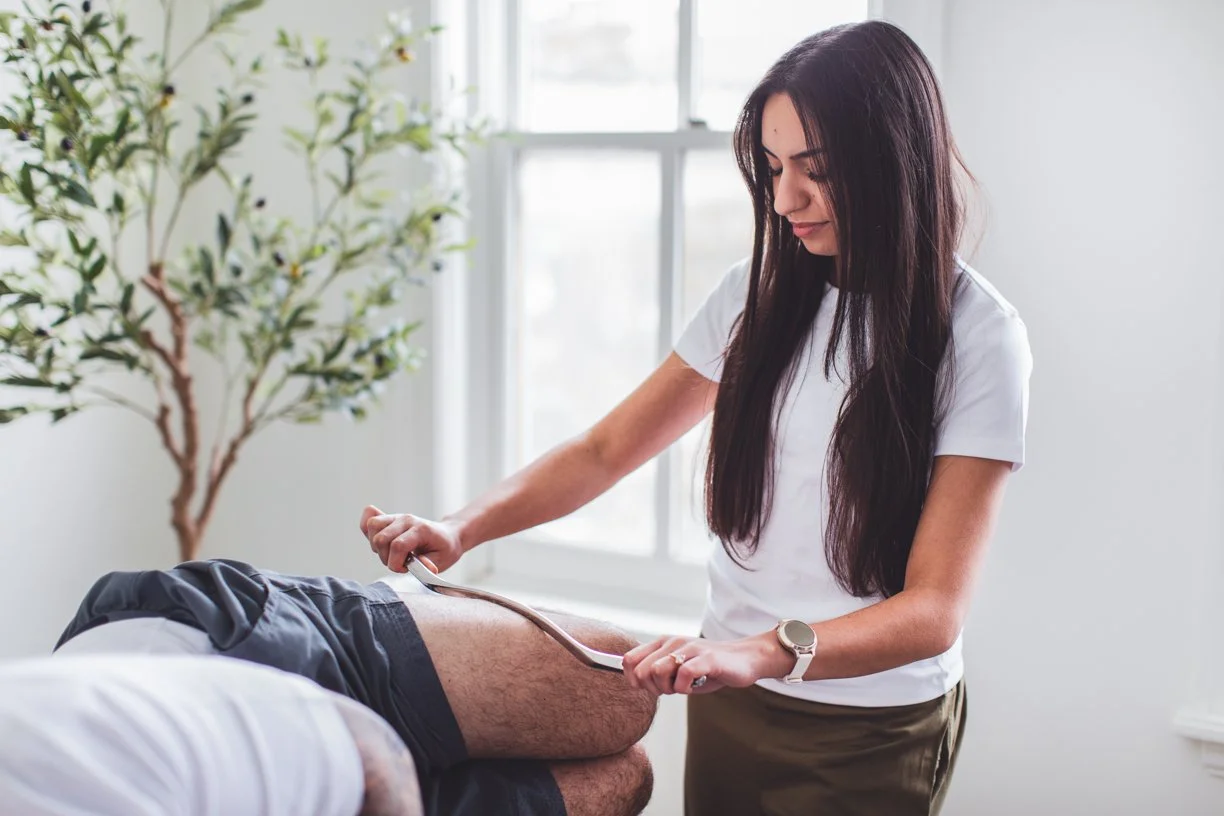
Physiotherapy in Whitby, ONGraston Technique
Release Tension. Restore Motion. Move Without Restriction.
If you've been dealing with stubborn pain, tightness, or scar tissue that just won't release — no matter how much you stretch, foam roll, or rest — the Graston Technique might be the breakthrough you're looking for. At The Physio Studio in Whitby, our trained therapists use this hands-on, instrument-assisted approach to help your body move freely again.
Targeted treatment. Real results. Built for everyday people and athletes alike.
What Is the Graston Technique?
The Graston Technique is a form of Instrument-Assisted Soft Tissue Mobilization (IASTM) that uses specialized stainless-steel tools to detect and treat muscle tightness, soft tissue adhesions, and chronic scar tissue.
By gliding these instruments along the affected area, your therapist can identify restrictions you might not even know are there — and gently break them down to improve circulation, restore mobility, and reduce pain.
Graston is widely used for stubborn or chronic soft-tissue issues that haven't fully resolved with stretching, rest, or other therapies on their own.
A Quick Definition
The Graston Technique is a hands-on therapy that uses stainless-steel instruments to identify and treat scar tissue, soft tissue adhesions, and muscular restrictions, helping reduce pain and restore range of motion.
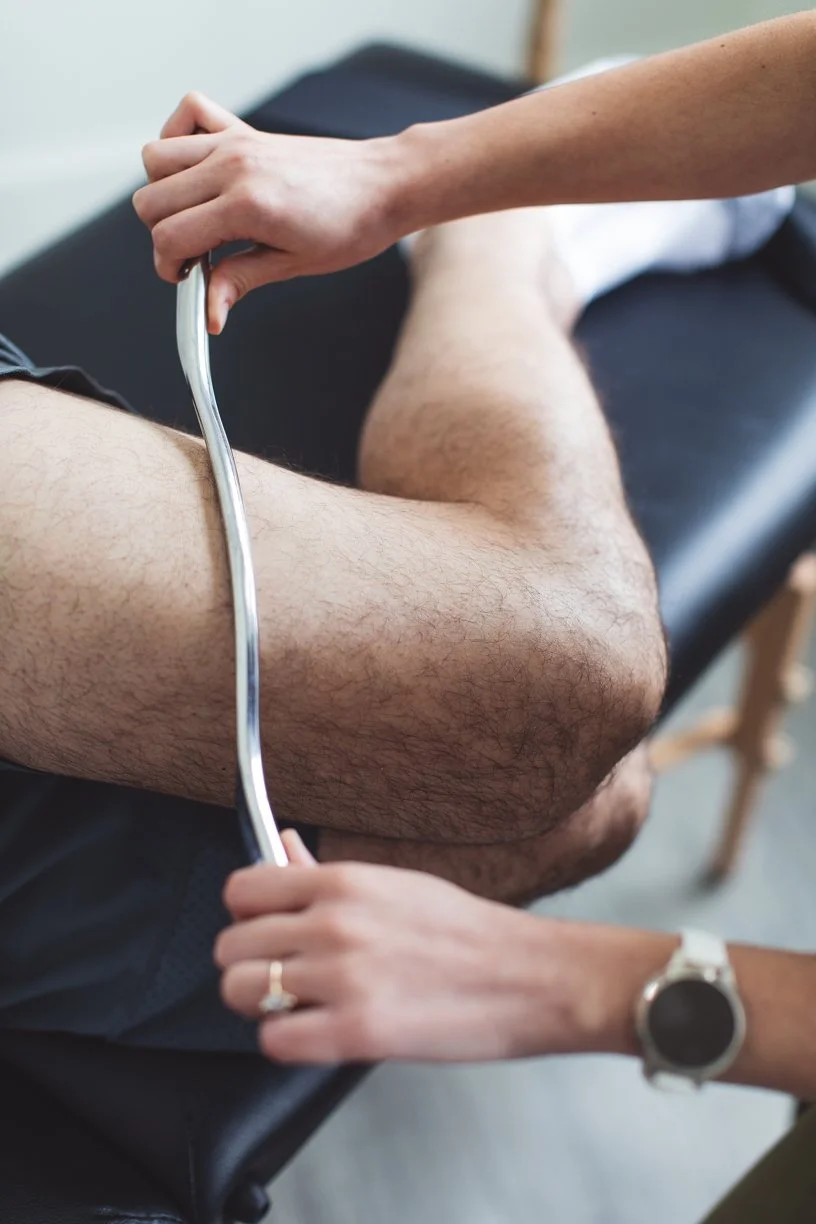
Your Graston therapist uses ergonomically designed stainless-steel instruments to glide over your muscles, tendons, and connective tissue. As they move across the treatment area, they can feel restrictions, adhesions, and areas of dysfunction that often can't be detected by hand alone.
Once these areas are identified, the same instruments are used to:
Break down collagen cross-links and scar tissue
Stretch tight connective tissue (fascia)
Increase blood flow to the area
Stimulate a healing response in damaged tissue
Reduce pain and improve range of motion
The result is tissue that can move, glide, and function more freely — supporting better movement, less pain, and a more complete recovery.
How Does the Graston Technique Work?
What Does the Graston Technique Help Treat?
Graston is most effective for chronic, overuse, and scar-tissue-related issues — but it can also support recovery from acute injuries and post-surgical rehabilitation. Common conditions treated at The Physio Studio in Whitby include:
Lower Body Conditions
Plantar fasciitis
Achilles tendonitis
Patellar tendonitis (jumper's knee)
IT band tightness and discomfort
Hamstring strains and chronic tightness
Knee ligament or meniscus-related issues
Shin splints
Upper Body Conditions
Rotator cuff tendonitis
Tennis elbow (lateral epicondylitis)
Golfer's elbow (medial epicondylitis)
Carpal tunnel syndrome
Frozen shoulder
Wrist and forearm pain
Neck, Back, and Whole-Body Concerns
Chronic neck and shoulder tension
Lower and mid-back tightness
Post-surgical scar tissue
Adhesions from previous injuries
Trigger points and stubborn knots
If you've been told you have "a lot of scar tissue" or "tight fascia" — Graston is often a strong option
Graston Technique
-
Breaks down scar tissue and adhesions that limit movement and cause pain.
Restores range of motion in restricted joints and muscles.
Reduces chronic pain and tension that hasn't responded to other treatments.
Improves circulation and blood flow to support faster tissue healing.
Encourages tissue remodeling so muscles and connective tissue function properly again.
Speeds up recovery from overuse injuries, sports injuries, and post-surgical scarring.
Complements rehab and exercise to help you get more out of your training and treatment.
Many patients describe feeling lighter, looser, and more mobile after just a few sessions.
-
We know that "metal tools on your muscles" might sound intimidating — but Graston is precise, controlled, and designed to support your body's healing. Here's what your session at The Physio Studio in Whitby typically looks like.
1. A Brief Assessment
Your therapist will start with a quick conversation about what's been bothering you, your history, and your goals. They'll assess your movement, range of motion, and the affected area.
2. Warm-Up
A short warm-up — often light cardio or specific movements — helps prepare your tissue for treatment and improves the effectiveness of the technique.
3. Instrument-Assisted Treatment
Your therapist will glide the Graston instruments over the affected area. You may feel a "scraping" or "gritty" sensation as they work through restrictions. The pressure is adjusted based on your comfort and the condition being treated.
4. Stretching and Strengthening
After treatment, your therapist will guide you through targeted stretches and strengthening exercises. This step is essential — it encourages the tissue to remodel properly and helps the results stick.
5. Aftercare and Next Steps
You'll leave with clear guidance on hydration, movement, and what to expect over the next 24–48 hours, along with a plan for follow-up sessions if needed.
-
Graston is generally well-tolerated, but it's normal to experience some short-term effects, especially in areas with significant adhesions or scar tissue. These can include:
Mild redness or warmth in the treatment area
Temporary bruising, especially with deeper or chronic restrictions
Slight soreness for 24–48 hours, similar to a workout
These effects typically resolve quickly. Your therapist will explain what to expect and how to support your recovery between sessions.
-
Graston is a fit for almost anyone dealing with persistent soft-tissue restrictions or chronic pain. We regularly work with:
Athletes and active adults managing overuse injuries
People with chronic tendon issues like tennis elbow, golfer's elbow, or Achilles tendonitis
Patients recovering from surgery with scar tissue affecting movement
Office workers dealing with chronic neck, shoulder, or back tension
Tradespeople and labourers managing repetitive strain
Runners, cyclists, and fitness enthusiasts with stubborn tightness or recurring flare-ups
Anyone whose pain or restriction hasn't fully responded to other forms of therapy
If something isn't getting better the way it should — Graston is often the missing piece.
-
Graston is a specialized treatment that requires both training and experience. Here's what makes our Whitby clinic the right place for it.
Trained, Experienced Therapists
Our therapists are trained in the Graston Technique and use it as part of a thoughtful, individualized treatment plan — not as a one-size-fits-all approach.
Treatment Built Around the Whole Body
We don't just treat the symptom — we look at how movement patterns, posture, and previous injuries may be contributing to your issue, and use Graston as part of a broader plan.
Locally Trusted in Whitby and Durham Region
We proudly serve Whitby, Brooklin, Oshawa, Ajax, Pickering, and surrounding communities with a patient-first approach to physiotherapy and soft-tissue care.
A Calm, Welcoming Space
Our Whitby studio is designed to feel approachable and unhurried. You'll get focused, one-on-one time with your therapist in a setting built around your comfort and recovery.
FAQs
What is the Graston Technique in simple terms?
The Graston Technique is a hands-on therapy that uses stainless-steel instruments to find and treat scar tissue, adhesions, and muscle restrictions. It helps reduce pain, restore movement, and support healing in tissues that aren't recovering well on their own.
Does Graston hurt?
Most people describe Graston as intense but not painful. You may feel a scraping or gritty sensation, especially in areas with restriction, but your therapist adjusts the pressure to your comfort throughout the session.
How is Graston different from massage?
Massage works through the therapist's hands to relax muscles and improve circulation. Graston uses specialized instruments that can detect and treat deeper restrictions, scar tissue, and adhesions that are difficult to address with hands alone.
What conditions does the Graston Technique help with?
Graston is commonly used for plantar fasciitis, Achilles tendonitis, rotator cuff tendonitis, tennis and golfer's elbow, IT band tightness, carpal tunnel symptoms, and chronic neck or back tension. It's also used to address scar tissue from past injuries or surgery.
How many sessions will I need?
It varies based on your condition and how long the issue has been present. Some patients see meaningful improvement within 3–6 sessions, while more chronic issues may take longer. Your therapist will recommend a plan after your initial assessment.
Is bruising normal after Graston?
Mild redness, warmth, or temporary bruising can happen — especially in areas with significant scar tissue or adhesions. These effects usually resolve quickly and are a normal part of the healing response.
Can the Graston Technique help with old injuries?
Yes. Graston is particularly effective for old injuries where scar tissue or adhesions are still limiting movement or causing pain, even years after the initial injury.
Is Graston safe?
Yes. When performed by a trained therapist, the Graston Technique is a safe and effective treatment. Your therapist will assess whether it's appropriate for your condition before starting.
Do I need a referral to book Graston in Whitby?
In most cases, no, you can book directly. Some insurance plans may require a doctor's referral for reimbursement, so it's worth checking with your provider.
Is Graston covered by insurance in Ontario?
Graston is typically covered as part of a physiotherapy session under most extended health benefits plans in Ontario. Coverage varies by plan, so we recommend confirming with your insurance provider.
Where is The Physio Studio located?
We're located in Whitby, Ontario, and proudly serve patients from across Whitby, Brooklin, Oshawa, Ajax, Pickering, and the surrounding Durham Region.
If pain, tightness, or scar tissue has been limiting your movement — and other treatments haven't fully worked — the Graston Technique at The Physio Studio in Whitby may be the next step. Our team is here to help you move better, feel stronger, and finally break through what's been getting in your way.
Book your Graston Technique session in Whitby today and experience what targeted, instrument-assisted soft tissue therapy can do for your body.